our newsletter
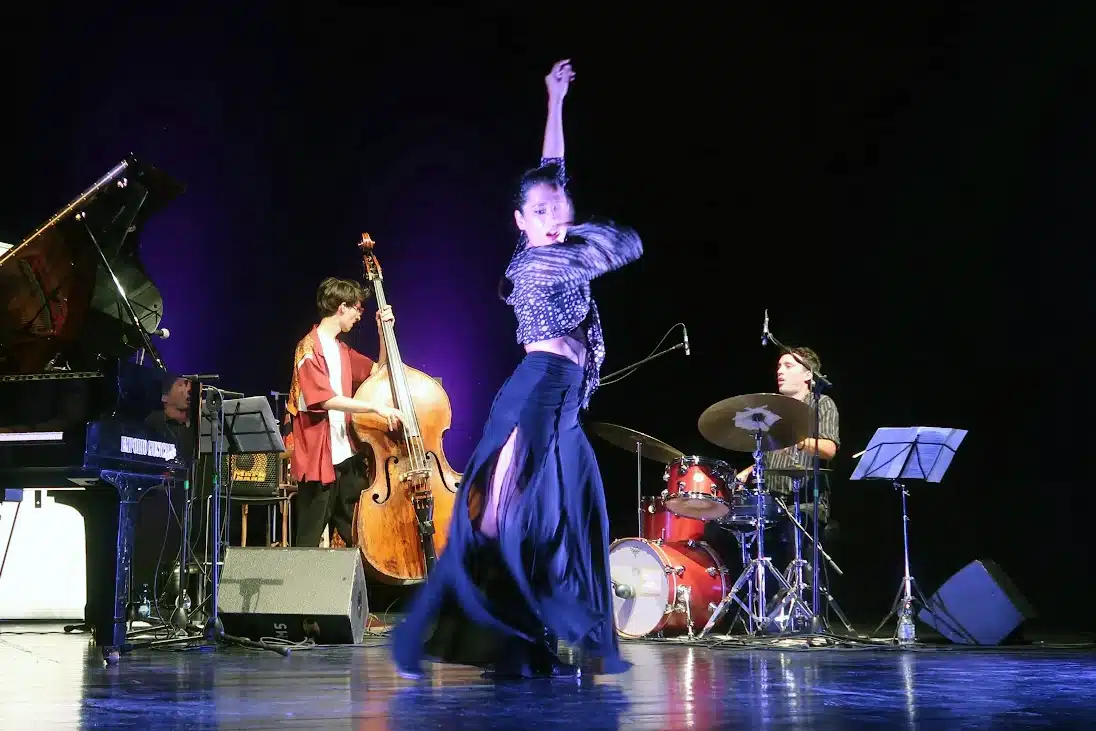
The international dimension has been part of Taller de Músics’ journey since its beginnings. Over more than four decades, artists, musicians and professionals from around the world have come to Barcelona, while artists and projects connected to Taller de Músics have taken their music to stages further afield.
This outlook has been shaped through education, creation and the performing arts: opening spaces for exchange, connecting artists and professionals, and fostering new collaborations.
One of the first major spaces for international exchange at Taller de Músics was the Seminari Internacional de Jazz, which held 31 editions between 1980 and 2011. For more than three decades, the Seminars brought some of the most important figures in international jazz to Barcelona and connected several generations of musicians associated with Taller de Músics with the currents that were transforming the music of their time.
From the first editions, held in Banyoles, its classrooms and stages welcomed key jazz figures such as Thad Jones, John Scofield, David Liebman, Richie Beirach, Max Roach, John Abercrombie, Mulgrew Miller and Brad Mehldau. During the 1990s and 2000s, the Seminars also brought to Barcelona a new generation of musicians who would go on to have a major influence on contemporary jazz, including Kurt Rosenwinkel, Seamus Blake, Chris Cheek, Kevin Hays and Bill Stewart.
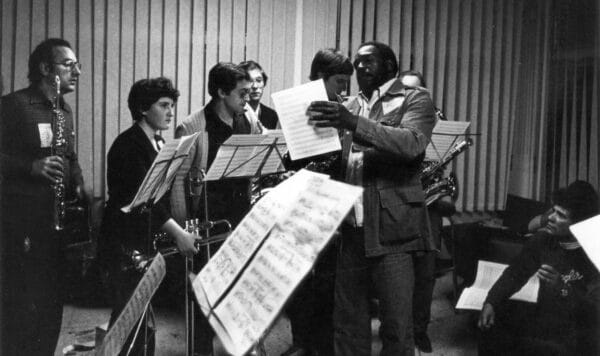
Thad Jones at the 1st International Seminar, 1980
But the Seminars were also a space where different musical traditions could meet. Jazz entered into dialogue with flamenco, Latin and Afro-Caribbean music and other musical traditions, with artists such as Enrique Morente, Chano Domínguez, Chicuelo, Jorge Pardo, Carles Benavent, Miguel Poveda, Manolo Sanlúcar, Paquito D’Rivera, Jerry González, Gonzalo Rubalcaba, Giovanni Hidalgo and José Alberto “El Canario”, among many others.
Beyond masterclasses and concerts, the Seminars created a meeting space that brought together musicians from different backgrounds, generations and musical languages. The encounter between Enrique Morente and Max Roach is a good example: they both met within the context of the Seminars and later shared the stage at the Bienal de Flamenco de Sevilla.
Across 31 editions, Taller de Músics thus turned Barcelona into a meeting point with the international scene, while bringing its musicians into contact with artists who were opening up new paths in jazz and other forms of music. An approach to exchange that remains part of the way Taller de Músics learns, creates and works today.
This spirit of exchange also found its way into programming. In 1980, Taller de Músics launched the Setmana de Jazz de Barcelona, which began after the graduation of the first class at Taller. Over the following years, the festival grew and moved through different venues across the city, becoming a meeting point for musicians working in jazz, flamenco, blues, rock and other forms of music.
In 1992, coinciding with the Barcelona Olympic Games, the Setmana evolved into the Mostra de Jazz Europeu, expanding its focus to the European scene. The new format brought musicians from different European countries to share the stage with local artists, while creating professional and artistic exchanges. For several editions, the Mostra became a genuine platform connecting Barcelona with European jazz.
The international dimension of this period was not limited to bringing artists to Barcelona. The Mostra also helped put the local scene into circulation and foster professional relationships with other territories. Documentation from 1993, for example, records the presence of foreign promoters and journalists at the Mostra and, that same year, several performances by groups connected to Taller de Músics in France, Denmark and Germany, as well as a connection with the European Jazz Network.
Over the years, this approach to internationalisation also gave rise to projects in which encounters between artists from different backgrounds directly became processes of creation.
The Seminari Internacional Carmen Amaya, launched in the 1990s, opened up a particularly significant space for dialogue between jazz and flamenco, with artists such as Enrique Morente, Chano Domínguez, Jorge Pardo, Carles Benavent and Manolo Sanlúcar. This encounter between different languages and traditions would continue through numerous international projects connected to Taller de Músics.
Enrique Morente’s career is one of the earliest examples of this way of working. His relationship with Taller de Músics was connected to encounters between flamenco and other musical traditions, including his collaboration with The Bulgarian Voices in Sofia. Mayte Martín, also connected to the Seminars and to Taller’s activities, developed an important international career, with performances and projects in different European countries.
Miguel Poveda represents another major international career to emerge from this environment. His connection with Taller de Músics led to numerous projects and collaborations that brought flamenco into other musical and cultural contexts. One of these was Qawwali Flamenco, with Chicuelo and Pakistani master Faiz Ali Faiz, bringing together cante jondo and the qawwali tradition and resulting in a recording and international tour. In 2006, Poveda shared a project with Argentine bandoneonist Rodolfo Mederos in Diálogos, an encounter between flamenco and tango presented at the Teatro Colón in Buenos Aires. A year later, he performed with Maria del Mar Bonet at the Metropolitan Museum of Art in New York.
International careers have also been built through education. Rosalía spent several years studying at Taller de Músics, first at the Raval school and later at the Escola Superior de Música del Taller de Músics. During those years, she not only trained in the classroom, but also began performing on stage and developing a professional career that took her to different places, with the support of Taller’s Management department. Among the projects that took her outside Spain was Blancanieves, with Chicuelo. Her subsequent international career shows, from a new generation, how far a career built through education, creation and the performing arts can reach.
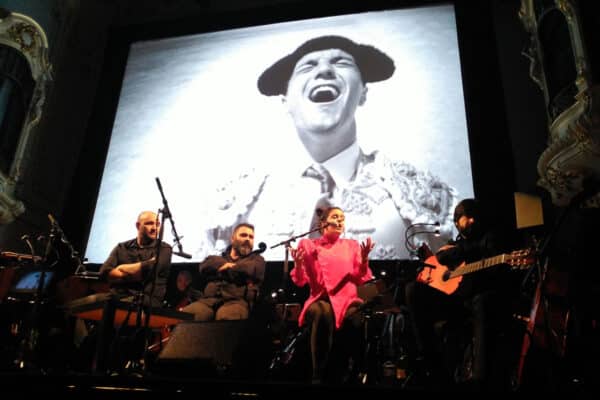
Rosalía en la proyección del film Blancanieves, Hamburgo (Alemania), 2015
These are just some examples of a much broader journey, in which education, creation and the performing arts have become intertwined with international exchange. Artists from different generations have found at Taller de Músics a space to learn, experiment, share and begin building careers that would later travel much further afield.
These early years help us understand something that continues to define the way we work: internationalisation has never been simply about going abroad. It has also meant bringing other scenes here, creating spaces for encounters, connecting musicians from different backgrounds and developing projects from these relationships.
From the International Seminars to the Mostra de Jazz Europeu, through the first tours, exchanges and collaborations, a network of relationships gradually took shape, expanding over time into new territories, languages and forms of collaboration.
A journey that began more than four decades ago and continues today through new networks, projects, artists and stages.
From Barcelona, Taller de Músics connects with artists, projects and professionals from different territories. Some of these connections become tours and concerts; others take the form of co-productions, residencies, exchanges or new collaborative projects.
The map shows some of these projects and collaborations, a small selection of the many connections that are part of our journey.
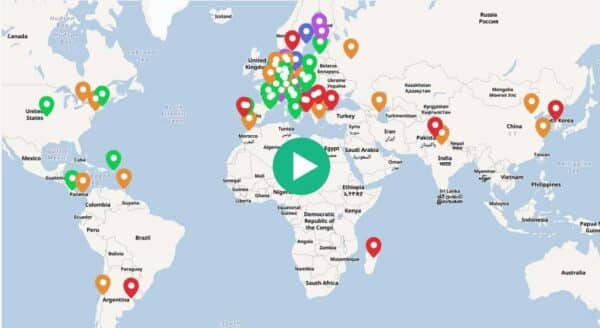
Keeping music in motion means enabling artists and projects connected to Taller de Músics to go abroad, reach new audiences and become part of new circuits and musical scenes.
We work to facilitate this circulation through programming, promotion, professional intermediation and the creation of new opportunities. This includes everything from tours and concerts to showcases and mobility projects, helping a wide range of artistic proposals find new stages.
Some projects that illustrate this journey:
Los Aurora have taken their distinctive dialogue between flamenco and jazz to South Korea, Russia, Canada and Chile. In 2019, together with South Korean group Band Dulda, they also developed an artistic co-production that explored the exchange between the two musical cultures.
Chicuelo has taken his music to stages across Europe and Asia. In recent years, his activity has included a tour of China in 2023 and performances in Germany, Slovenia and Hungary in 2025.
This circulation is also supported by initiatives such as Green Pilot Tours, which helps different projects reach European circuits. Tal Gamlieli, Liberica, Alto for Two, Irene Reig, Barencia, Pasquale Caló and Carola Ortiz are among the artists and groups that have taken part in these tours.
But this commitment to keeping music in motion goes back a long way. Throughout our history, artists and projects connected to Taller de Músics have performed on stages across Europe, the Americas and Asia, from Qawwali Flamenco to collaborations involving Miguel Poveda, Chicuelo, the Original Jazz Orquestra and the Ensemble Taller de Músics.
The international dimension also opens up spaces for creating together. Through European projects, residencies and collaborations with organisations in other countries, Taller de Músics brings artists, musicians and professionals from different territories together to develop new proposals.
These projects begin with exchange and generate new ways of working, creating and connecting with other musical scenes. Some have a defined duration; others open up collaborative processes that continue over time and lead to new projects.
This way of working continues to generate new projects. In recent years, we have initiated and taken part in initiatives that connect Taller de Músics with different European scenes and organisations.
European Caravan is one of these international lines of collaboration, developed between 2023 and 2025 together with Madam Fortuna, from Belgium, creating spaces for encounter, exchange and creation between different European contexts. This experience gave rise to Metropolis 2126, also led by Madam Fortuna, which continues this collaboration and focuses on artistic creation and youth leadership through international cooperation. The project includes a residency in Barcelona, as well as residencies in Poland and Belgium and a stage in the Netherlands, further expanding the spaces for encounter and creation between artists from different territories.
In I AM ABROAD, the encounter between creators from Barcelona, Gothenburg and Vienna became a process of residency, artistic production and circulation around free improvisation, together with Knutpunkt, from Sweden, and Tumulttotal, from Austria.
And Spiritual Music expands this network towards new languages and territories. Together with Musicamorfosi, from Italy, and Jazz Festivals & Events, from Romania, the project explores new forms of creation and exchange around the organ and contemporary spiritual music.
These are just some examples of a much broader journey of collaboration, which over the years has connected Taller de Músics with artists, institutions and musical scenes across many territories.
Internationalisation is also built through networks. Being part of them allows us to share knowledge, create new opportunities, connect artists and professionals, and develop projects that would be difficult to undertake in isolation.
Taller de Músics participates in international networks and partnerships that connect our activities with festivals, institutions, cultural organisations and educational centres in different countries.
Taller de Músics is a member of the Europe Jazz Network (EJN), a European network dedicated to supporting the development of jazz and improvised music. Taking part in this network allows us to be part of a space for professional and artistic exchange, share experiences and create new opportunities for collaboration.
Taller’s involvement in the EJN also extends to its working bodies, with representatives of Taller de Músics serving on its board, as well as participation in initiatives such as the Artist Exchange Program, seminars and professional meetings.
A key part of this strategy of connection is JAZZ I AM, the jazz meeting organised by Taller de Músics.
Based in Barcelona, JAZZ I AM brings together artists, programmers, festivals, agents, institutions and other professionals from the sector to foster mutual understanding, create opportunities and support the circulation of projects.
More than a professional meeting, JAZZ I AM has become a space for building relationships that continue beyond the event itself, connecting the local scene with international professionals and organisations.
Taller’s international activity is complemented by other networks and collaborations, including Plataforma Jazz España, Institut Ramon Llull, Catalan Arts, ACE, Instituto Cervantes and AECID, which help expand opportunities for mobility, programming and international cooperation.
Fairs, music markets and professional meetings are essential spaces for discovering other musical scenes, presenting our projects, building relationships and creating new opportunities.
Throughout our history, we have taken part in key events for jazz, roots music and other forms of creative music, as well as professional music industry markets. These are spaces where we present our artists and projects, discover new programming circuits and build connections with festivals, agents, institutions and professionals from different territories.
These include Jazzahead!, WOMEX, Tallinn Music Week, International Jazz Platform, European Jazz Conference, Jammin’ Juan, Seoul Music Week, InJazz, Medimex, Folkest and Occijazz, alongside professional markets and meetings such as BIME, Mercat de Música Viva de Vic, Fira Mediterrània, Fira B!, FiM Vila-seca and Música en Rede.
This presence allows us to open doors for our artists and projects, while also listening to what is happening in other scenes, sharing experiences and identifying new ways to collaborate.
A presence that is renewed every year and continues to expand our network of professional connections.
The international dimension is part of the way Taller de Músics understands music education. For decades, we have shared knowledge, methodologies and experiences with other schools and professionals, creating opportunities for our educational community to discover different contexts and ways of making music.
This commitment dates back to the late 1980s, with participation in international networks and meetings of jazz schools. In 1989, Taller joined the International Association of Schools of Jazz (IASJ) as a founding member and has since taken part in international meetings of jazz education centres and professionals, including gatherings in Siena and at Berklee in Boston.
MOBILITY AND EXCHANGE
Today, international academic activity is developed mainly through ESEM, via mobility programmes, exchanges and cooperation projects with other music education institutions.
Participation in Erasmus+ enables mobility and exchange opportunities for students, teaching staff and school personnel. These are complemented by Blended Intensive Programmes (BIP), which combine virtual and in-person work with European institutions. The map includes, among others, participation in BIPs held in Ferrara (Italy) in 2024 and Riga (Latvia) in 2025, while work is already underway on a new BIP planned for 2027, led by Lucas Martínez and Oriol Vallès. It will bring together participants from different countries around masterclasses, international training, original repertoire, jam sessions and concerts.
Mobility also takes shape through experiences connected to international festivals and meetings. Projects such as Fara Music Festival, Jazz à Vienne and Babel Sound, as well as the academic and artistic exchange with ETHNO Hungary, combine workshops, performances, living together and exchange with musicians from other countries.
International cooperation also opens up spaces for research and reflection on musical practice.
One example is Mediterranean Jazz Practices: Ethnomusicology, Improvisation and Transcultural Pedagogy, a research project coordinated by the Giuseppe Verdi Conservatory in Milan that explores the influence of Mediterranean musical traditions on contemporary jazz, particularly improvisation, oral transmission and intercultural pedagogy.
We have also participated in European cooperation projects focused on music education and professionalisation. One example is MP3, developed between 2020 and 2022 together with organisations from France and Italy. The project explored new approaches to training musical groups, the exchange of teaching practices and the skills needed to build sustainable professional careers.
The international dimension is also built by making music with other artists. Throughout Taller’s history, young musicians connected to our educational programmes have taken part in projects, productions and tours with artists from different generations, backgrounds and musical languages.
In recent years, programmes such as Accions per a Músics Novells have strengthened this connection between education, creation and professionalisation. Since 2019, the programme has supported artistic residencies led by prominent national and international figures, followed by promotion of the projects, their circulation and participation in festivals and other professional settings.
The Ensemble Taller de Músics is another example of this approach. Its collaborations with artists such as Omar Sosa, Chano Domínguez, Perico Sambeat, Antonio Lizana and Salvador Sobral have enabled young ESEM musicians to take part in creative processes and share stages with artists with long-standing careers. Some of these productions have also travelled internationally, including the Ensemble’s tour with Omar Sosa in France and Portugal and the performance by Chano Domínguez & Taller de Músics Ensemble in Canada.
These experiences are part of an approach to education in which education, creation and the performing arts are connected: learning through making music, sharing it with other artists and opening up from the very beginning to new contexts, languages and ways of working.
From those first Seminars to the projects that today connect artists, professionals, schools and organisations across different territories, Taller de Músics has understood exchange as a way of learning, creating and keeping music in motion.
An outlook that continues to grow from Barcelona, open to new scenes, new encounters and new forms of collaboration.
Want to know more?
Contact Us